
主题
面试速答(先看这里)
**一句话结论:**Function Call是Open AI提出的,最开始时只针对自家的GPT用的,他需要 先通过结构化的方式定义出来有哪些工具 。
60秒标准回答:
Function Calling都是一种让大模型会使用工具的方案。 如果一个大模型不会用工具,那就只能是一个简单的对话机器人,并且只能根据以往训练的数据进行对话
如果你想让给大模型能够帮你联网查询、帮你操作本地文件、帮你调外部服务,都需要让他会用工具,而Function Call,MCP、A2A都是可以让大模型更好的使用工具的技术方案
Function Call是Open AI提出的,最开始时只针对自家的GPT用的,他需要 先通过结构化的方式定义出来有哪些工具 。如
**答题顺序:**结论 → 原理/机制 → 关键流程 → 场景与取舍 → 易错点
回答主线:
- **要点1:**Function Calling都是一种让大模型会使用工具的方案。
- **要点2:**如果你想让给大模型能够帮你联网查询、帮你操作本地文件、帮你调外部服务,都需要让他会用工具,而Function Call,MCP、A2A都是可以让大模型更好的使用工具的技术方案。
- **要点3:**其中的 TOOLS 部分就是关于工具的定义,对于每个工具,它是一个具有两个字段的JSON object:
- **要点4:**但是需要注意的是,LLM只会选择用哪个工具,并且给出调用这个工具的具体参数,他不会直接执行这个工具,工具的执行,还是需要靠应用侧的代码来执行的。
- **要点5:**所以,根据上面的交互图,我们总结下,通过大模型做Function call的过程是:
**记忆锚点:**Function → JSON → function → object → string → Calling
易错提醒:
- 值得注意的字段包括 type 、 required 和 enum 。
- 但是需要注意的是,LLM只会选择用哪个工具,并且给出调用这个工具的具体参数,他不会直接执行这个工具,工具的执行,还是需要靠应用侧的代码来执行的。
加分表达:
- 如果一个大模型不会用工具,那就只能是一个简单的对话机器人,并且只能根据以往训练的数据进行对话。
- 如果你想让给大模型能够帮你联网查询、帮你操作本地文件、帮你调外部服务,都需要让他会用工具,而Function Call,MCP、A2A都是可以让大模型更好的使用工具的技术方案。
- 如下面这张图,其实是OpenAI给出的函数调用的过程,可以看到,最关键的函数的执行调用,其实是靠开发者来进行的,也是需要借助我们的应用,即你的python代码或者java代码。
追问准备:
- 围绕「Function」:底层原理是什么?使用时有哪些边界和常见坑?
- 围绕「JSON」:底层原理是什么?使用时有哪些边界和常见坑?
- 围绕「function」:底层原理是什么?使用时有哪些边界和常见坑?
- 如果线上出现异常,你会如何定位、验证并规避?
典型回答
**Function Calling都是一种让大模型会使用工具的方案。**如果一个大模型不会用工具,那就只能是一个简单的对话机器人,并且只能根据以往训练的数据进行对话。
如果你想让给大模型能够帮你联网查询、帮你操作本地文件、帮你调外部服务,都需要让他会用工具,而Function Call,MCP、A2A都是可以让大模型更好的使用工具的技术方案。
Function Call是Open AI提出的,最开始时只针对自家的GPT用的,他需要先通过结构化的方式定义出来有哪些工具。如:
sql
import json

def get_current_temperature(location: str, unit: str = "celsius"):
    """Get current temperature at a location.

    Args:
        location: The location to get the temperature for, in the format "City, State, Country".
        unit: The unit to return the temperature in. Defaults to "celsius". (choices: ["celsius", "fahrenheit"])

    Returns:
        the temperature, the location, and the unit in a dict
    """
    return {
        "temperature": 26.1,
        "location": location,
        "unit": unit,
    }

def get_temperature_date(location: str, date: str, unit: str = "celsius"):
    """Get temperature at a location and date.

    Args:
        location: The location to get the temperature for, in the format "City, State, Country".
        date: The date to get the temperature for, in the format "Year-Month-Day".
        unit: The unit to return the temperature in. Defaults to "celsius". (choices: ["celsius", "fahrenheit"])

    Returns:
        the temperature, the location, the date and the unit in a dict
    """
    return {
        "temperature": 25.9,
        "location": location,
        "date": date,
        "unit": unit,
    }

def get_function_by_name(name):
    if name == "get_current_temperature":
        return get_current_temperature
    if name == "get_temperature_date":
        return get_temperature_date

TOOLS = [
    {
        "type": "function",
        "function": {
            "name": "get_current_temperature",
            "description": "Get current temperature at a location.",
            "parameters": {
                "type": "object",
                "properties": {
                    "location": {
                        "type": "string",
                        "description": 'The location to get the temperature for, in the format "City, State, Country".',
                    },
                    "unit": {
                        "type": "string",
                        "enum": ["celsius", "fahrenheit"],
                        "description": 'The unit to return the temperature in. Defaults to "celsius".',
                    },
                },
                "required": ["location"],
            },
        },
    },
    {
        "type": "function",
        "function": {
            "name": "get_temperature_date",
            "description": "Get temperature at a location and date.",
            "parameters": {
                "type": "object",
                "properties": {
                    "location": {
                        "type": "string",
                        "description": 'The location to get the temperature for, in the format "City, State, Country".',
                    },
                    "date": {
                        "type": "string",
                        "description": 'The date to get the temperature for, in the format "Year-Month-Day".',
                    },
                    "unit": {
                        "type": "string",
                        "enum": ["celsius", "fahrenheit"],
                        "description": 'The unit to return the temperature in. Defaults to "celsius".',
                    },
                },
                "required": ["location", "date"],
            },
        },
    },
]
MESSAGES = [
    {"role": "system", "content": "You are Qwen, created by Alibaba Cloud. You are a helpful assistant.\n\nCurrent Date: 2024-09-30"},
    {"role": "user",  "content": "What's the temperature in San Francisco now? How about tomorrow?"},
]其中的TOOLS部分就是关于工具的定义,对于每个工具,它是一个具有两个字段的JSON object:
type:string,用于指定工具类型,目前仅"function"有效function:object,详细说明了如何使用该函数
对于每个function,它是一个具有三个字段的JSON object:
name:string 表示函数名称description:string 描述函数用途parameters:JSON Schema,用于指定函数接受的参数。请参阅链接文档以了解如何构建JSON Schema。值得注意的字段包括type、required和enum。
大多数框架使用“工具”格式,有些可能使用“函数”格式。根据命名,应该很明显应该使用哪一个。
定义好了工具之后,再向他提问的时候,将我们的prompts和上面定义的可用的工具都传给LLM,那么他就能根据用户的问题,选择工具去使用,更好的做回答了。
但是需要注意的是,LLM只会选择用哪个工具,并且给出调用这个工具的具体参数,他不会直接执行这个工具,工具的执行,还是需要靠应用侧的代码来执行的。
如下面这张图,其实是OpenAI给出的函数调用的过程,可以看到,最关键的函数的执行调用,其实是靠开发者来进行的,也是需要借助我们的应用,即你的python代码或者java代码。
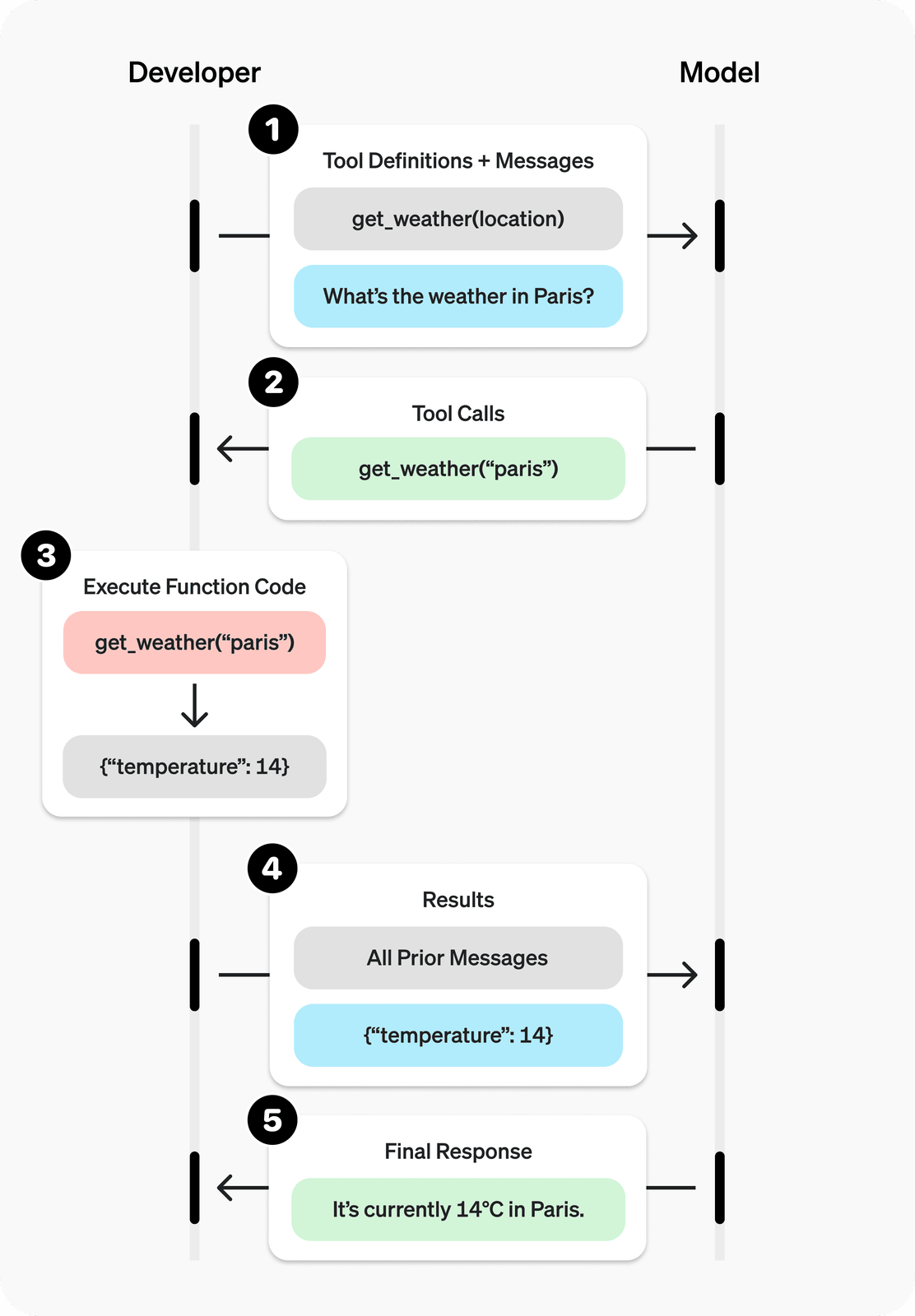
所以,根据上面的交互图,我们总结下,通过大模型做Function call的过程是:
- 向模型发送包含其可调用工具的请求
- 从模型接收一个工具调用结果(包括具体的工具和参数)
- 在应用端执行代码,使用工具调用的输入
- 使用工具输出向模型发起第二次请求,带有工具调用结果
- 接收模型返回的最终响应(或更多工具调用)